

what are the features of cyber security?
Cyber security is designed to protect digital systems and data from unauthorized access and cyber threats. The key features of cyber security include confidentiality, integrity, availability, authentication, and protection against external attacks. These features work together to ensure that information remains secure, accurate, and accessible only to authorized users. Understanding these features is essential for maintaining safe and reliable digital environments.

28 Jan 26

Limitations of Statistics
Statistics is an important tool used to collect, analyze, and interpret numerical data in economics, business, and education. However, statistics has certain limitations that restrict its accuracy and applicability. It deals only with quantitative data, studies aggregates rather than individual cases, and produces results that are true only on average. Statistical conclusions depend heavily on data quality, methods used, and correct interpretation. Understanding the limitations of statistics helps students apply statistical tools logically and avoid misleading conclusions, especially in Class 11 academic studies.
28 Jan 26
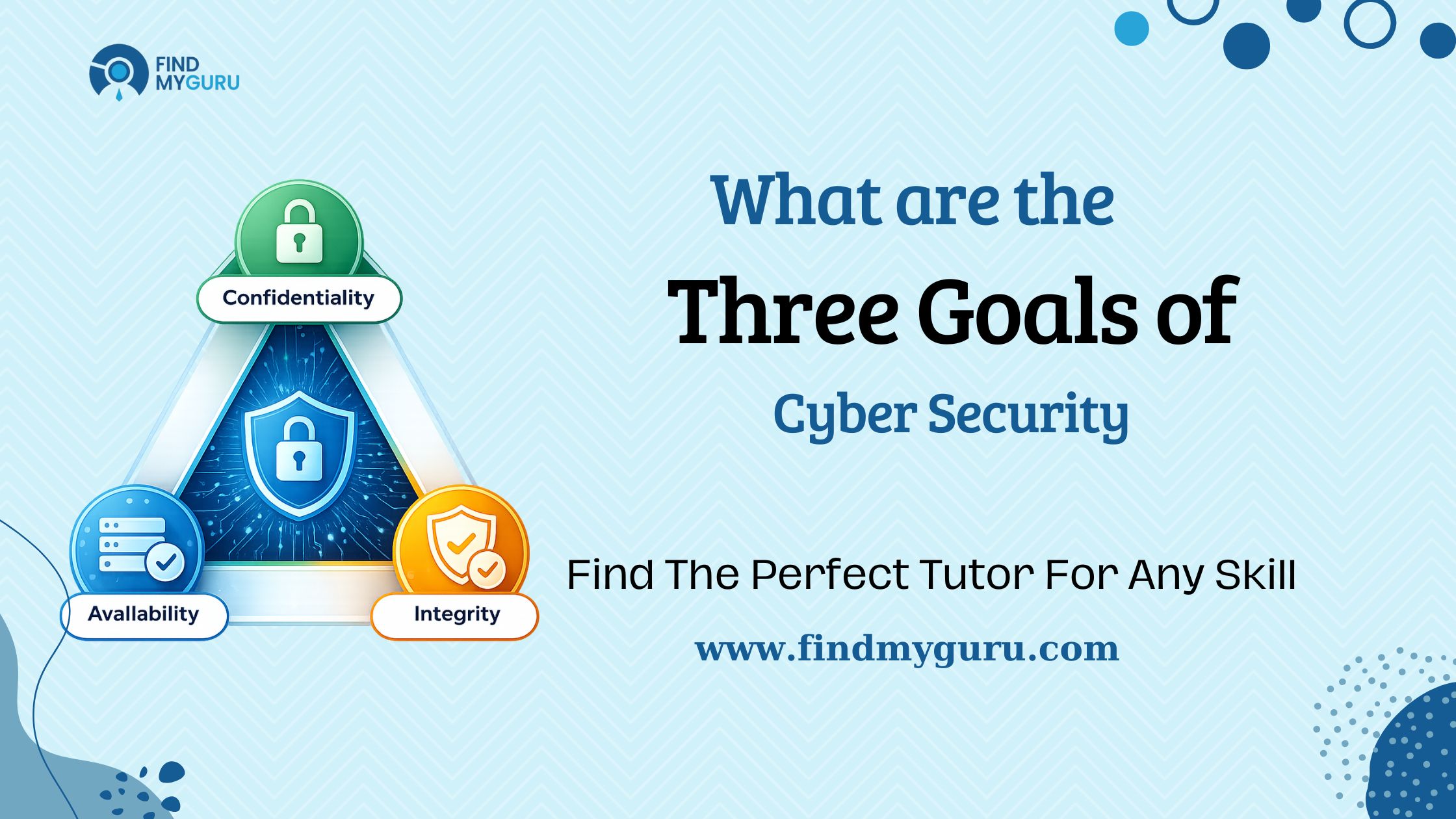
what are the three goals of cybersecurity
The three main goals of cybersecurity are known as the CIA Triad: Confidentiality, Integrity, and Availability. These principles form the foundation of all cybersecurity practices and policies. Confidentiality ensures that sensitive information is accessible only to authorized users and protected from unauthorized disclosure. Integrity focuses on maintaining the accuracy and trustworthiness of data by preventing unauthorized modification or destruction. Availability ensures that systems, networks, and information are accessible to authorized users whenever required. Together, these three goals help organizations safeguard digital assets, maintain user trust, and ensure business continuity in the face of cyber threats.
28 Jan 26

Which is Easier TOEFL or IELTS
Choosing between TOEFL and IELTS depends on individual strengths, test format preferences, and study goals. In 2026, TOEFL remains a fully computer-based exam with structured academic tasks, while IELTS offers both academic and general modules with a live speaking test. TOEFL may feel easier for students comfortable with computers and American accents, whereas IELTS suits those confident in face-to-face speaking and varied question formats. Understanding these differences helps learners select the exam that best matches their abilities and career objectives.
28 Jan 26

History of Mathematics
The history of mathematics explains how numerical thinking and logical reasoning evolved across human civilizations. From early counting systems to advanced algebra and calculus, mathematics developed to solve real-world problems related to trade, construction, and science. The origin of mathematics cannot be traced to a single inventor, as multiple cultures contributed independently over time. Understanding the evolution of mathematics helps learners grasp concepts more clearly and appreciate mathematics as a structured, logical discipline.
28 Jan 26

Passing Marks in CBSE Class 12
Passing marks in CBSE Class 12 are defined by the Central Board of Secondary Education to ensure uniform academic evaluation across all schools. To pass the Class 12 board examination, students must secure the minimum qualifying marks in each subject as well as in theory and practical or internal assessment components separately. For the 2026 CBSE Class 12 examinations, the minimum passing requirement remains 33 percent per subject, subject to official CBSE guidelines. Understanding the exact passing criteria, subject-wise marks distribution, and grading system is essential for result interpretation, compartment eligibility, and future academic planning.
28 Jan 26
CBSE 12 Maths Exam
The CBSE 12 Maths Exam 2026 is a crucial board examination for Class 12 students pursuing science, commerce, and mathematics-based courses. As per the tentative CBSE date sheet, the Mathematics / Applied Mathematics exam is scheduled on 9 March 2026. The exam will be conducted for 3 hours and will assess students on calculus, algebra, vectors, probability, and competency-based questions. Students must prepare according to the latest CBSE syllabus and exam pattern, with a strong focus on concept clarity, step-wise problem solving, and regular practice using NCERT textbooks and sample papers. Early planning and structured revision play a key role in scoring high marks in the CBSE Class 12 Maths board exam.
27 Jan 26
What Is the Standard for Modem Is Drawn Up?
The standard for modem is drawn up by the International Telecommunication Union (ITU), which defines global rules for data transmission, modulation, and error control. These standards ensure compatibility between devices, reliable communication, and consistent performance. Understanding modem standards is essential for students studying computer networks and data communication.
27 Jan 26

Why Are Resources Distributed Unequally Over the Earth?
Resources are distributed unequally over the earth because natural conditions are not the same everywhere. Factors such as geological structure, climate, landforms, and natural processes determine where resources are found. Minerals develop over millions of years in specific rock formations. Water and forests depend on rainfall and temperature. Fertile soil is mainly found in river plains, while deserts and mountains have limited resources. Since these physical conditions vary from region to region, resources are unevenly distributed across the earth.
27 Jan 26

Indian Chess Players
India has become a major force in global chess, producing over 80 Grandmasters, including legends like Viswanathan Anand and young talents like R Praggnanandhaa and D Gukesh. Key milestones include Raja Rithvik R as the 70th Grandmaster and Koustav Chatterjee as the 78th Grandmaster of India. Explore the full Indian chess grandmaster list, top players, and rising stars shaping the future of Indian chess.
27 Jan 26
IELTS Exam Fee in India
The IELTS exam fee in India for 2026 ranges from ₹16,050 to ₹17,250 depending on the test type. Fees are uniform across most cities, with options for rescheduling, cancellation, and enquiry on results available at additional cost. Candidates can pay online via cards, net banking, or UPI. For structured preparation, students can connect with qualified IELTS tutors or explore other learning skills via FindMyGuru to maximize their score.
27 Jan 26

How Many Attempts for JEE Advanced?
JEE Advanced has a strict attempt limit that every IIT aspirant must understand before appearing for the exam. A candidate is allowed a maximum of two attempts in two consecutive years after appearing for the Class 12 board examination for the first time. JEE Advanced is conducted once a year, and no additional attempts are permitted beyond this window, irrespective of category. Eligibility is also linked to age limits, year of passing Class 12, JEE Main qualification, and prior IIT admissions. Understanding these rules is essential to avoid losing a valid attempt and to plan preparation effectively.
26 Jan 26

JEE Advanced Marks vs Rank
JEE Advanced marks vs rank explains how aggregate scores in the examination translate into All India Rank. The relationship between marks and rank changes every year based on exam difficulty, candidate performance, and evaluation patterns. Understanding year-wise trends, category-wise variations, and official qualifying criteria helps students interpret results accurately and make informed IIT admission decisions through JoSAA counselling.
26 Jan 26
Which is Better CBSE or ICSE?
Choosing between CBSE and ICSE is an important academic decision for students and parents. CBSE focuses on concept-based learning and is closely aligned with national-level competitive exams, while ICSE emphasizes in-depth subject understanding, analytical skills, and language proficiency. Both boards are nationally and internationally recognized, and neither is universally “better.” The right choice depends on a student’s learning style, academic goals, and future plans. Understanding the difference between CBSE and ICSE helps families make an informed, balanced decision for long-term academic success.
26 Jan 26

CBSE Age Criteria for Class 1 Admission
Understanding the CBSE age criteria for Class 1 admission is important for parents planning their child’s school entry. As per CBSE guidelines and the National Education Policy (NEP) 2020, a child must complete six years of age by the prescribed cutoff date, usually 31st March or 1st April of the academic year. The age limit is designed to ensure academic readiness, emotional maturity, and alignment with the foundational learning framework. Schools may follow state-specific policies regarding cutoff dates and documentation requirements. Parents must provide valid proof of age such as a birth certificate and previous school records for LKG or UKG students. This guide explains the official CBSE age limit for Class 1 and LKG, variations across schools and states, required documents, and key points parents should verify before admission.
26 Jan 26

JEE Mains Marks vs Percentile
JEE Mains marks vs percentile explains how raw scores are converted into percentile scores using the NTA normalisation process. Since JEE Main is conducted in multiple shifts and sessions, percentile reflects relative performance rather than absolute marks. This system ensures fairness by accounting for differences in paper difficulty. Understanding the relationship between marks, percentile, and rank helps aspirants interpret results accurately, set realistic expectations, and make informed decisions during counselling and admission processes.
26 Jan 26